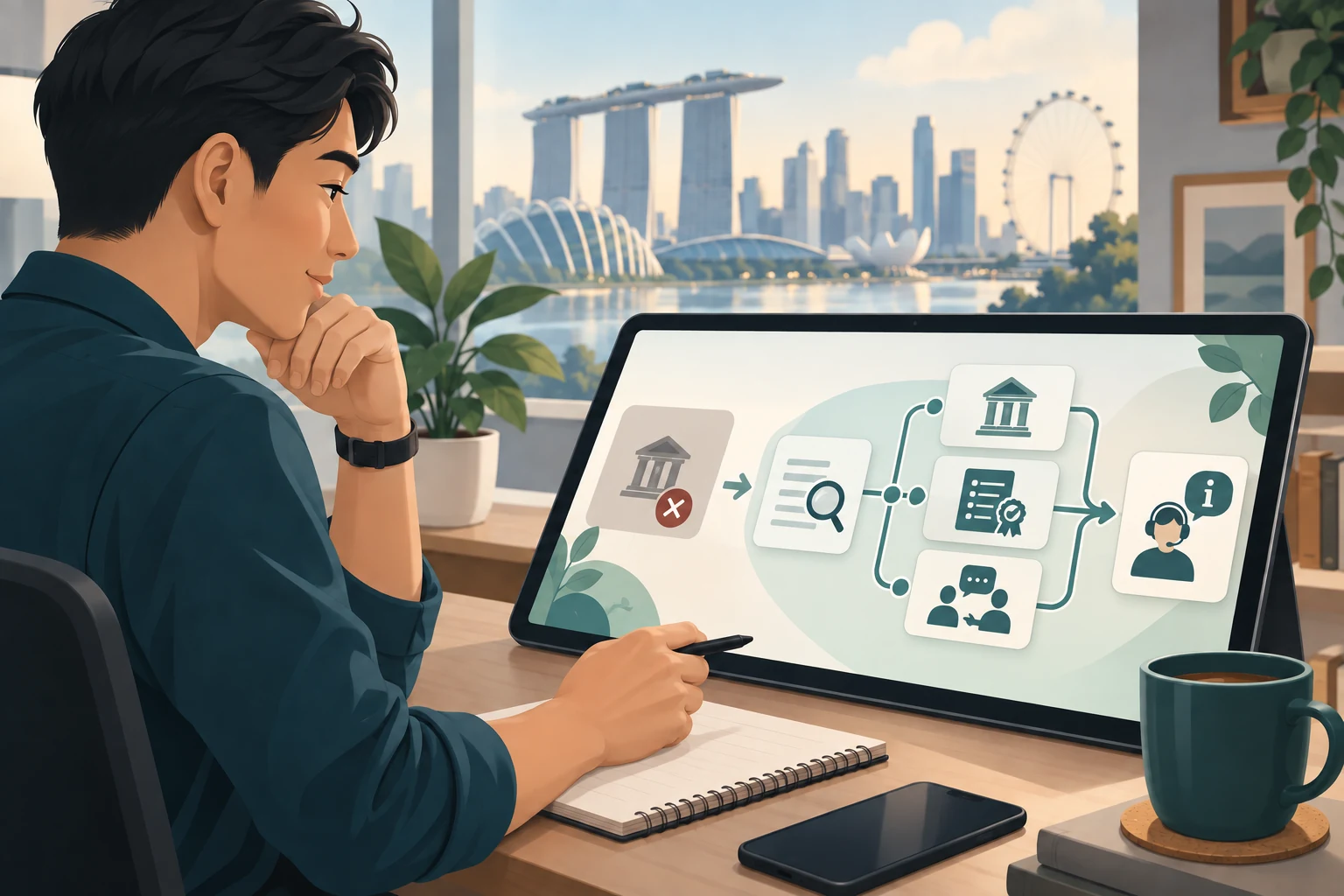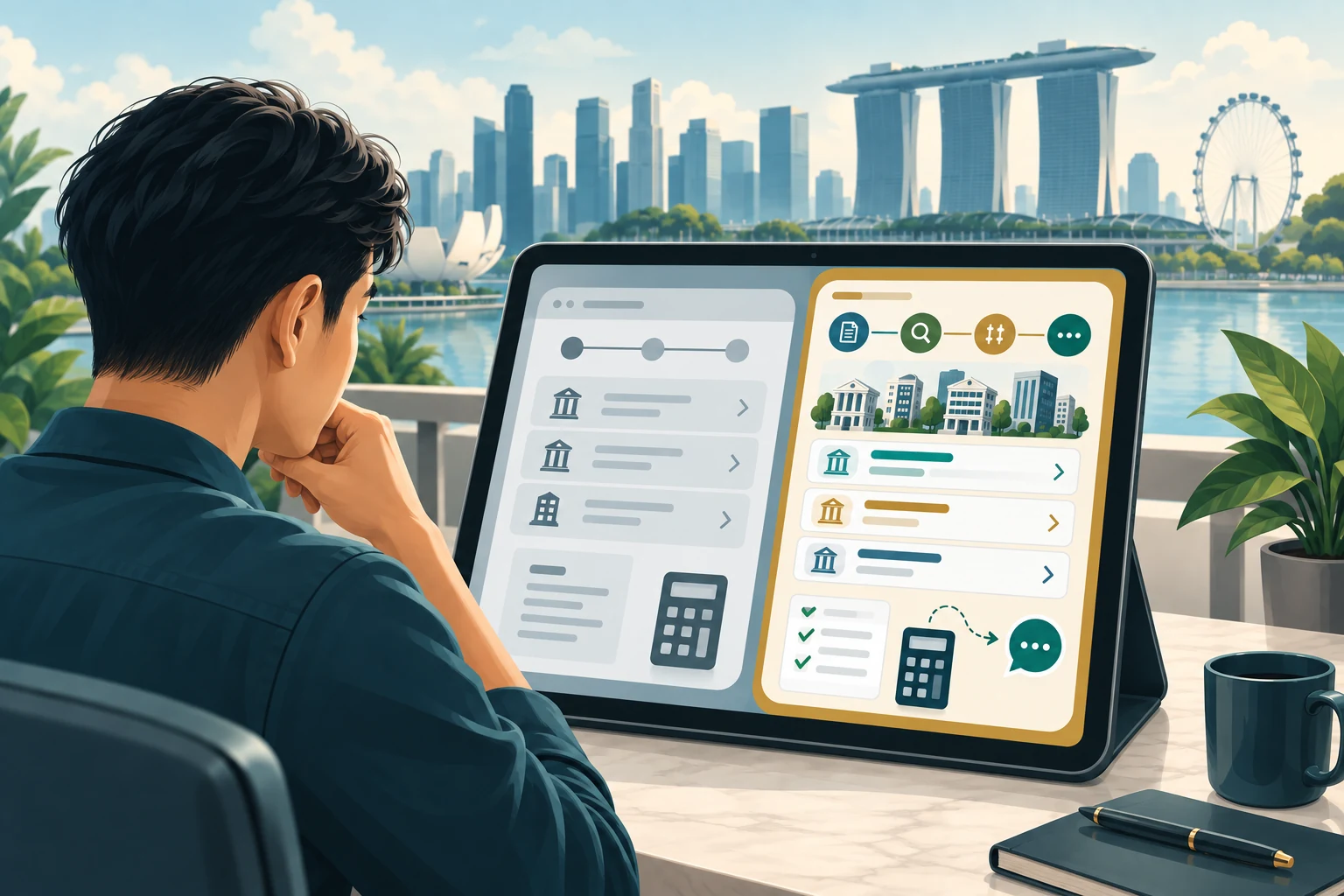

Before applying for a loan, check the lender against the Registry of Moneylenders, rather than relying on an ad or a message on your phone. Singapore’s Ministry of Law and its Registry publish the list of licensed moneylenders and guidance for borrowers. Use those pages to check the business, the website and the way the loan is offered before sharing documents or signing anything.
Short answer: verify the lender and website against the official Registry list, ignore loan solicitations through prohibited channels, understand the permitted interest and fees, and expect an in-person identity check at the approved place of business. Read the contract and repayment schedule in a language you understand. A licence does not make every offer affordable, and this guide is not legal or financial advice.
1. Verify the lender and website first
Open the Registry’s List of Licensed Moneylenders in Singapore. The page currently links to the complete list and warns about scammers using similar business names, website addresses and social accounts.
Match the details before you continue.
Match these three details
- Business name matches the Registry list exactly.
- Physical address matches the approved place of business.
- Website address matches the address shown in the Registry list.
Do not rely on a search result, a social profile or a website that merely says it is licensed. The Registry warns that impersonators may collect an NRIC number, address or phone number. It also warns about requests for “GST fees” or “processing fees” before a loan is disbursed. Verify the exact website from the Registry page instead. [1]
The list is a point-in-time government resource. Recheck it when you apply, and save the page or PDF you used for your records.
2. Check how the offer reached you
The Registry’s borrower guide says licensed moneylenders may advertise only through three channels, and it specifically tells borrowers not to respond to advertisements outside those channels. [2]
Allowed advertising versus offers to avoid
- Business or consumer directories, in print or online media.
- The moneylender's own website.
- Advertising within or on the exterior of the business premises.
- Text messages (SMS) offering a loan.
- Unsolicited phone calls.
- Social media messages or posts offering a loan.
- Flyers or emails outside the three allowed channels.
The Registry list also warns that licensed moneylenders are not allowed to solicit loans through text messages, phone calls or social media. [2]
That does not mean every ad in a permitted channel is a good offer. It means the route is a basic screening question. Do not treat an unsolicited message as proof that the sender is licensed. Report a suspicious advertisement to the Registry; the borrower guide gives the Registry’s contact number as 1800-2255-529. [2]
3. Know the legal caps, but do not mistake them for a quote
The Registry borrower guide states these limits for loans from licensed moneylenders:
Legal fee caps for licensed moneylenders
Up to 4% per month.
Up to 4% per month on an amount repaid late.
Up to S$60 for each month of late repayment.
Up to 10% of the principal when the loan is granted.
Total charges — interest, late interest, upfront administrative fees and late fees together — cannot exceed an amount equal to the loan principal. Court-ordered legal costs on a successful recovery claim sit outside that cap. [2]
The guide also says interest must be computed on the remaining principal after payments appropriated to principal. [2]
These are maximum permitted charges, not a recommended price and not a promise of approval. Ask the lender to put the actual rate, fee and repayment schedule in dollar terms. A lower advertised rate can still leave you with less cash if a fee is deducted from the principal, as the separate PMAL comparison article explains.
4. Expect documents and an in-person check
A licensed moneylender should not approve a loan over the phone, SMS or email before receiving an application form and supporting documents. The Registry gives an income tax assessment and payslips as examples of supporting documents. That does not create one universal document list for every applicant, so ask the lender what it needs and why. [2]
The Registry’s current list page says the lender must meet the borrower in person at the approved place of business for physical, face-to-face identity verification before granting a loan. A fully online loan transaction, or a transaction at another location, is disallowed. [1]
Before signing, the lender must explain the loan terms in a language you understand and give you a copy of the loan contract. Read the repayment schedule, rate and every fee.
Normal checks versus warning signs
- The lender explains the loan terms in a language you understand.
- The lender gives you a complete copy of the loan contract.
- Identity documents are checked, face-to-face, to verify who you are.
- Asks for your Singpass user ID or password.
- Keeps your NRIC, passport, work permit, employment pass, driver's licence or ATM card.
- Asks you to sign a blank or incomplete Note of Contract.
- Grants the loan without explaining the terms or giving you the contract.
- Withholds part of the principal for a reason other than the permitted upfront approval fee.
Treat a request for your Singpass ID or password as a warning sign. The Registry says to be cautious if a moneylender asks for it. [2]
Those are warning signs in the Registry guidance. If one occurs, keep the messages and documents and contact the Registry. If there is harassment, threat or violence during debt recovery, the guide says to make a police report as well. [2]
5. Ask these questions before you sign
Get clear answers in writing:
Before you sign, get this in writing
- Approved principal and actual cash received
- Interest rate and how it is calculated
- Monthly instalment, number of instalments and total repayment
- Upfront fee deducted, and when the balance is paid
- Late interest and late fee that could apply
- Early-settlement rebate and its conditions
- Exact payment due date
- Business name, licence, address and website
- When and where the in-person check and signing happen
If an answer changes between an advertisement, a message and the contract, pause. Use the written contract and ask the lender to correct or explain the difference before signing.
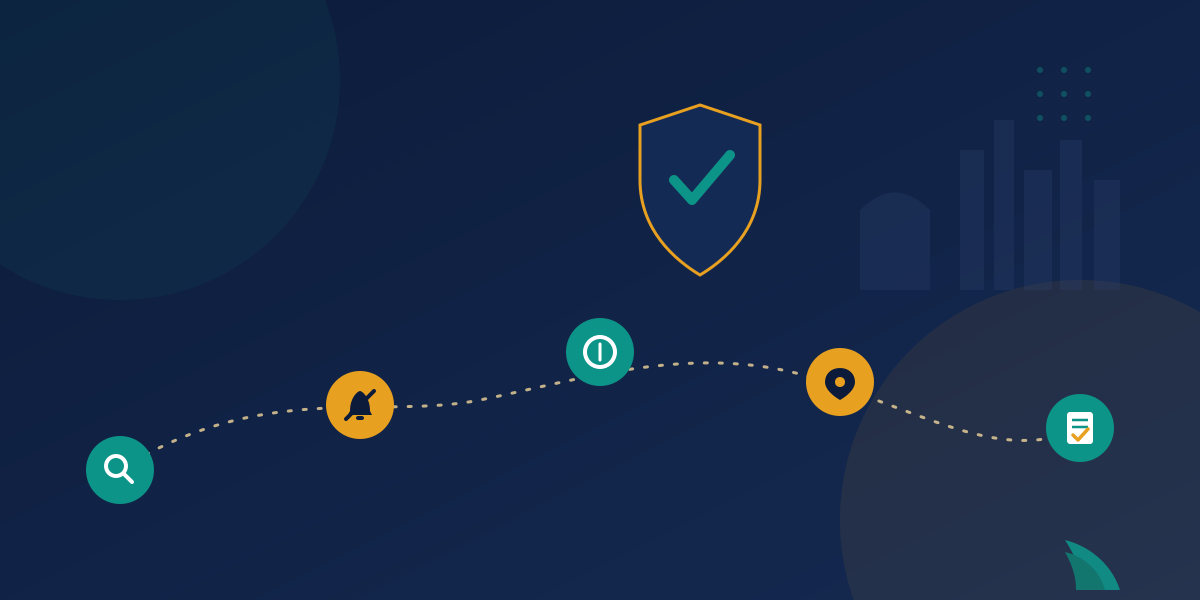
A five-step check before applying
Five-step check before applying
- RegistryOpen the official list and match the business, address and website.
- Ad routeReject unsolicited SMS, calls, social messages, flyers and email offers.
- CostsWrite down the actual rate, fees, instalment and total repayment.
- MeetingConfirm face-to-face identity verification at the approved place of business.
- ContractRead the loan contract and repayment schedule, then keep your copy.
This is a practical reading order, not a substitute for the Registry's guidance or the contract.
Does a PMAL comparison replace these checks?
No. PickMeALoan is a comparison and application platform, not a moneylender. If you use a comparison service, you still need to verify the chosen lender against the official Registry list and complete that lender’s required assessment and signing process. A matched offer is not a government approval or a guarantee that the loan suits your budget.
Common questions
Visible answers
Is a moneylender licensed because its website says so?
Not by that statement alone. Match the exact business and website with the Registry's current list.
Can a licensed moneylender message me on WhatsApp or call to offer a loan?
The Registry's guidance says licensed moneylenders are not allowed to solicit loans through text messages, phone calls or social media.
Can the lender charge more than 4% interest?
The Registry borrower guide states a maximum interest rate of 4% per month, plus a separate maximum late-interest rate of 4% per month when repayment is late.
Do I have to hand over my Singpass password or NRIC?
No. The Registry tells borrowers to be cautious if a moneylender asks for Singpass credentials or keeps identity documents.
Can I complete the loan fully online?
The Registry's current list page says a licensed moneylender must meet the borrower in person at the approved place of business for face-to-face identity verification.
What if I cannot afford the repayments?
Do not treat legal caps as a budget. Consider income, financial obligations and other assistance before approaching a moneylender.
Keep this checklist
Borrower safety checklist
- I matched the exact lender, address and website with the Registry list.
- The offer did not arrive through a prohibited solicitation channel.
- I know the cash I will receive, the instalment and the total repayment.
- I know the interest, upfront fee, late interest and late fee in the written terms.
- I will meet the lender in person at the approved place of business.
- I will not share Singpass credentials or surrender identity documents.
- I will receive and understand a complete copy of the contract before signing.
- The repayment fits after my existing financial commitments.
Registry and MinLaw pages were checked on 15 September 2026. Rules, lists and lender websites can change. This is general information, not legal or financial advice, a licence confirmation, an offer of credit or a guarantee of approval. Recheck the official Registry pages and the written contract before applying.
Sources
[1] MinLaw Registry of Moneylenders: List of Licensed Moneylenders in Singapore. The page links the licensed-moneylender list and contains warnings about impersonation, prohibited solicitation and mandatory face-to-face verification.
[2] MinLaw Registry of Moneylenders: FAQs on borrowing from licensed moneylenders. Used for advertising channels, interest and fee limits, contract explanations, supporting-document and identity warnings, complaints and affordability guidance.
[3] MinLaw: Professional Service Handbook for Licensed Moneylenders, version 3.1, updated August 2026. Background source for the Registry’s current handbook and its discussion of responsible lending, communicating terms and advertising compliance. No claim in this article depends on handbook guidance that is not stated in [1] or [2].